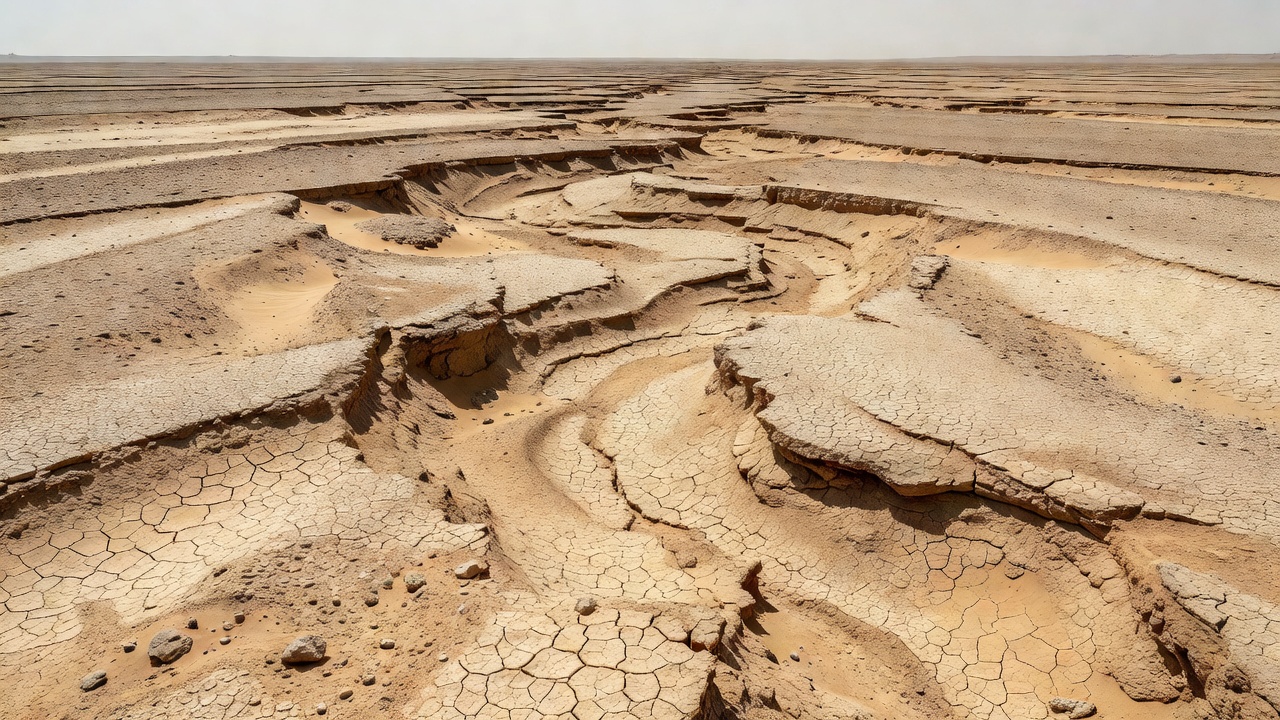
The Geography of Riverless States
Countries without rivers generally fall into two distinct climatic and geographical categories:
- Hyper-Arid Continental Deserts: Regions such as the Arabian Peninsula where annual precipitation is minuscule and evaporated before permanent surface flow can form.
- Small Low-Lying Coral Atolls & Limestone Islands: Geographies like Kiribati, Tuvalu, Malta, or Bermuda where porous limestone absorbs rain instantly or island width is too narrow for streams to accumulate.
The Giant Among Them: Saudi Arabia
Saudi Arabia is by far the largest sovereign state with no permanent rivers, covering over 2,149,690 km². The kingdom relies on ephemeral dry riverbeds known as wadis that flood briefly during rare winter cloudbursts, alongside the world's most extensive seawater thermal desalination network.
Complete Inventory of Riverless Sovereign Nations
| Country | Geographic Type | Primary Freshwater Method |
|---|---|---|
| Saudi Arabia | Desert Peninsula | Seawater Desalination & Deep Fossil Aquifers |
| United Arab Emirates | Desert Coast | Desalination Plants & Cloud Seeding |
| Kuwait | Desert Coast | Thermal Multi-Stage Flash Distillation |
| Qatar | Arid Peninsula | Desalination & Recycled Greywater |
| Bahrain | Arid Archipelago | Desalination & Dammam Aquifer |
| Oman | Arid / Mountainous | Aflaj Irrigation Systems & Desalination |
| Yemen | Arid Highlands | Seasonal Wadis & Groundwater Wells |
| Malta | Limestone Island | Reverse Osmosis Desalination & Aquifers |
| Maldives | Coral Atoll | Rainwater Harvesting & Small Desal Units |
| Tuvalu | Coral Atoll | Domestic Household Rain Catchment Systems |
| Kiribati | Pacific Atolls | Freshwater Lenses (Underground Groundwater) |
| Nauru | Raised Coral Island | Reverse Osmosis & Rainwater Tanks |
| Monaco | Urban Microstate | Imported Water Supply via French Waterways |
| Vatican City | Urban Enclave | Rome Municipal Water Grid (Italy) |
How Modern Engineering Solves The River Deficit
Historically, lacking rivers meant population size was strictly capped by natural spring capacity. Today, technological innovations have decoupled human settlement from river geography:
Reverse osmosis filtration facilities supply over 60% of municipal tap water in Gulf Cooperation Council countries. In hyper-dense island nodes like Malta, multi-million-euro subterranean gallery systems capture rainwater percolating through upper limestone strata to safeguard national water reserves.